
Blogs



HAVE YOU SOWN ANY SEEDS THIS WEEK? IT DOESN'T HAVE TO BE MONEY. I KNOW WHEN PREACHERS HAVE A SERMON ON THIS THEY DON'T MENTION ANYTHING BUT MONEY. WELL, MOST OF THE ONES I HAVE HEARD ANYWAY. I GUESS THEY HAVE TO BECAUSE THEY REALLY DO NEED MONEY TO RUN THE CHURCH. NOW IF GOD HAS BLESSED YOU WITH A LOT OF MONEY, THEN, BY ALL MEANS, SOW SOME OF IT. MAYBE YOU HAVE THAT ABUNDANCE BECAUSE YOU HAVE BEEN SOWING. IF THIS IS TRUE, GOD BLESS YOU.


On the surface, it appears that this rich young ruler was "right on" in the way he approached Jesus and sought salvation. He ran, kneeled down to Jesus, and openly professed Him as a Good Master. What could be wrong with that?
First, he acknowledged Jesus as good but not as God. This is a pivotal point.
Every major religion of the world acknowledges that Jesus lived and will even admit that He definitely was a good man, but they won't recognize Him as God. If Jesus was only a good man, He couldn't save anybody. Jesus didn't just come to show us the way to God. He was the way, the only way unto the Father.
No man could come unto the Father, but by Him (Jn. 14:6). Jesus had made this point publicly many times before. This is...
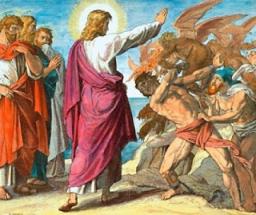
HAVE YOU EVER WONDERED WHY YOUR PRAYERS ARE NOT ANSWERED IMMEDIATELY? I'LL GIVE YOU THE FOLLOWING TO CONSIDER. GOD DOES ANSWERS PRAYERS IMMEDIATELY, HOWEVER, COULD THAT ANSWER BE SLOWED BECAUSE OF HINDERING SPIRITS?

Although adultery denotes one who has unlawful intercourse with the spouse of another, in its much broader term, it means to violate or pollute. Israel violated or polluted their covenant with God. Jeremiah says, "She (Judah) defiled the land, and committed adultery" (Jer. 3:9).
Adultery in relation to marriage also reflects a violation of the covenant of companionship. Sex outside of marriage is adultery because it violates or pollutes the covenant of marriage by introducing another party and bringing that relationship into the marriage. "They two shall be one flesh" (Eph. 5:31).
Divorce also adulterates or pollutes marriage because it disrupts or...

HAVE YOU EVER SAID, "THE DEVIL MADE ME DO IT"? WELL, YOU MIGHT NOT HAVE BEEN TOO FAR OFF. HE DIDN'T MAKE YOU DO IT BUT HE PROBABLY PUT THE IDEA IN YOUR MIND. THAT IS WHAT HE DOES TO MAKE US SIN, HE LIES AND DECEIVES US. JESUS WAS TALKING TO SOME OF THE JEWS AND EVEN SAID THE DEVIL IS A LIAR IN JOHN 8:44 Ye are of your father the devil, and the lusts of your father ye will do. He was a murderer from the beginning, and abode not in the truth, because there is no truth in him. When he speaketh a lie, he speaketh of his own: for he is a liar, and the father of it. THIS IS HOW HE DECEIVED EVE IN THE GARDEN. AFTER GOD HAD TOLD HER AND ADAM NOT TO EAT FROM THE TREE OF GOOD AND EVIL OR THEY WOULD DIE, SATAN TOLD EVE THAT SHE WOULD NOT DIE BUT THEY WOULD BECOME LIKE GOD, KNOWING GOOD AND EVIL. WELL, SHE FELL FOR IT AND THAT IS WHY THE WORLD IS IN THE SHAPE IT IS IN TODAY.

What does it mean for a man and a woman to become "one flesh?" The act of sexual intercourse between a man and a woman produces this one flesh relationship. Whether or not the man and woman ever cleave to each other in marriage; the physical act still binds them together as one flesh.
This is the reason that sexual relationships outside of marriage (whether extra-marital or pre-marital) are so damaging. Whether or not individuals get caught, pregnant or ever hurt anyone else with their sin, they are doing a lot of damage to themselves. There is a relationship that takes place through the sexual act that makes us one with that person. There is no such thing as just a "night on the town" or a "one night stand" and that's all...

WHEN GABRIEL TOLD MARY SHE WAS GOING TO HAVE A CHILD SHE ASKED "HOW CAN THIS BE" AND GABRIEL TOLD HER HOW. IF SHE HAD NOT ASKED, SHE MIGHT HAVE THOUGHT SHE WOULD HAVE IT THROUGH A NATURAL UNION AND THAT WOULD HAVE MADE HER UNUSABLE. SHE ASKED IN FAITH WHEREAS ZACHARIAS ASKED IN UNBELIEF. HE SUFFERED FOR THAT BECAUSE HE WAS NOT ABLE TO SPEAK UNTIL JOHN WAS BORN.
...

The Pharisees didn't really want to know what Jesus taught on divorce and remarriage. They didn't value His opinion but were tempting Him and desired to get Him mired in the big dispute of their day between liberal and conservative views on divorce. This was a very emotional issue then, just as it is today, and they thought they had Jesus in a "no win" situation.
However, as always, Jesus proved to be more than their match and He gave them much more than they asked for.
The Pharisees didn't question whether or not divorce was right. They took the right to divorce for granted. But Jesus, instead of expounding on acceptable grounds for divorce, went to the very root of the problem and showed that God never intended there to be any divorce at all....