
Blogs




Jesus is stating that our spirit, not our flesh, is where our life comes from. These people were so dominated by their physical lives that they were missing all the spiritual significance of His words. Although God's Word does benefit our physical man, the Word is spiritual and must be understood through the spirit. God's Word is spirit and it takes our spirit to illuminate its truths to our minds.
The Word of God is not paper and ink. Jesus is the Word, and He existed in spiritual form long before any words were inspired to be written down by the Holy Ghost. The Bible is simply a physical representation of Jesus and spiritual truth. It is inspired of God and therefore, totally accurate and reliable, and yet, until we...
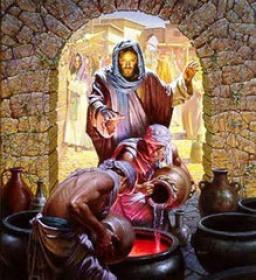

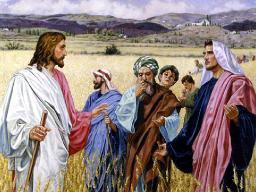
This scripture, as well as Matthew 15:12, reveals that people will be offended by the Gospel. As much as possible, however, we should make sure that it is not ourselves that are offensive. But we cannot labor under the deception that everyone will receive the Gospel, even if the truth was presented properly. We know that Jesus represented His Father perfectly and yet most people rejected His message.
In these two instances, when Jesus realized He had offended the listeners, He didn't apologize and try to make concessions to gain their acceptance. Instead, He got harder. This hard message of commitment is not only beneficial to those who receive it, but it serves a dual purpose in that it exposes the "tares among the wheat."
It is important to be...

Many thought that Jesus was speaking of cannibalism, but He was speaking of the spiritual man. Just as the physical man receives life from the food he eats, so the spiritual man receives life as he partakes of Jesus, the life of men (Jn. 1:4; 10:10; 14:6) or the "Bread of Life." Just as the life of a root is found in the soil, or a branch in the vine, or a fish in the sea, so the believer's true life is found to be in union with Christ.
The Bible presents salvation as a life transforming experience. Change is one of the distinguishing characteristics of a true believer. Yet, failure to understand that this change takes place in the spirit first, and is then reflected in the outward thoughts and actions, proportional to the way we renew our minds, has caused much confusion....


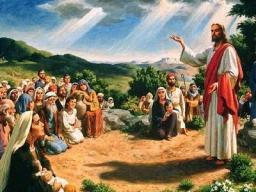
The Old Testament prophets prophesied of a new covenant where we would all be taught of God. This is speaking of revelation knowledge that comes from within, through our spirit. Under the Old Covenant, God dealt with the Jews through the outer man. He did this because an Old Covenant man (who was not born again) could not perceive the spiritual truths revealed in the New Covenant by the Spirit (1 Cor. 2:14). This difference between the old and new covenants is the reason why there had to be two covenants.
The Old Testament man was comparable to a child in his ability to grasp spiritual truth. It is impossible to explain spiritual truth to a young child, and yet, a child must be restrained from...
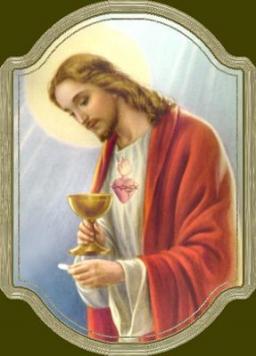
It is probable that these Jews were expecting Jesus to rain down manna on them the way God did before in the wilderness. After all, anyone who could feed five thousand men with one small lunch should be able to produce manna. They were still thinking of physical food.
The word "manna" means literally "what is it?" The children of Israel said, "It is manna: for they wist (or knew) not what it was." (Ex. 16:15) Manna was a nutritious food which appeared on the ground every morning shortly after the children of Israel left Egypt and began their 40-year wandering in the wilderness. Moses called it "bread which the Lord hath given you to eat."
The Lord, in speaking to Moses, called it "bread from heaven." It was small and round, like coriander seed, and was white in color or yellowish, like...