
Blogs



The Feeding of the 5000 from a Different Point of View
It was a Sunday, no I didn't go to church, I was at an Offroad Race in Las Vegas 1985. I was team Capt of a pretty successful Team Called Sandak Racing out of Corona. I had just arrived home from the race and it was about 6-7pm at night. A friend of mine had given me a new bible and it was laying on the coffee table. whew, was I tired. I picked up the bible and began to read. Somewhere in the old testament. Pretty cool what was happening back then. I was laying on the couch and I fell asleep with the bible opened on my chest.
The Incredible Dream:


Prayer which meets the requirements outlined in God's Word is always answered. Many times we don't perceive the answer because it always comes in the spiritual realm first before it is manifested in the physical realm. If we waver from our confident faith, then we abort the manifestation of that answer (Jas. 1:6-7; Heb. 10:35). But God did answer. Everyone who asks receives.
In the book of Daniel chapter 9, Daniel prayed a prayer and waited a relatively short period of time to see his answer to prayer. In less than three minutes the angel Gabriel appeared and answered all of his questions.
This same man prayed another prayer in Daniel chapter 10, but this time it took three weeks before he had an angelic messenger come and answer his questions....
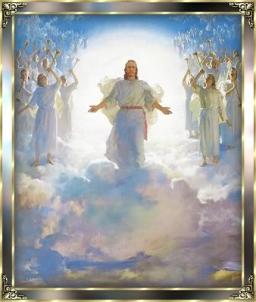
WILL YOU DIE?

There are many examples of people judging others in the scriptures. Paul prayed that our love would abound more and more in all judgment (Phil. 1:9). In light of the scriptures where Jesus and the disciples spoke of judging, it is evident that there must be a right and a wrong type of judging.
In Luke 12:56-57, Jesus uses the words "discern" and "judge" interchangeably. A dictionary definition of "judge" can mean many things from "condemn" to "appraise, to form an opinion about; to think or consider." There is certainly nothing wrong with discerning or appraising a situation or person. Quite the contrary, we need to try the spirits (1 Jn. 4:1). Judging when done as discernment, is good.
It is the condemning type of judgment that is wrong. We can defer passing sentence on people to God, and know that He will...

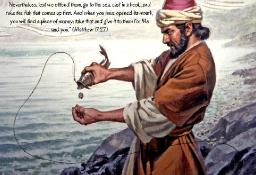
The Greek word used here for "thought" is "merimnao" and denotes "to be anxious or careful". In this passage, as well as the parallel passage in Luke 12:22-32, Jesus is commanding us not to worry or be anxious about our material needs being met. It would be impossible to have no thought whatsoever about our physical needs. Even Jesus thought about His need for money to pay taxes (Mt. 17:24-27). We are simply not to be preoccupied with thinking about riches or spending our time worrying about necessities. These things will be added unto us as we seek first the Kingdom of God.
The way we take or receive an anxious thought is by speaking it. Doubtful thoughts will come, but we do not sin until we entertain them. According to this verse,...


Jesus is speaking of spiritual vision. If we keep our attention (eye) single upon Jesus, the Word, then all that we will be filled with is the light of His Word (Jn. 1:1-14; Ps. 119:105). The key to victory is this singleness of purpose (Phil. 3:13). The strength of the laser lies in the fact that all of the light is concentrated on one single point. Likewise, the strength of the Christian lies in how single his or her vision is upon Jesus, "the author and finisher of our faith." (Heb. 12:1-3)
You may have God and riches, but you can only serve one of them. In Matthew 6:24, the Lord amplifies this by saying that we cannot serve two masters. Why is this so? Because we do not have...