
Blogs



Just as every sport has disputes that must be settled by the officials, the peace of God is the umpire that settles all disputes as to what the will of God is for our lives. We must learn to listen to and heed the peace of God in our hearts.
God's peace is something that every born-again believer has. It's a fruit of the Spirit. That peace is always umpiring; we just don't always pay attention. How many times have you acted contrary to the peace in your heart and afterwards, you experience disaster? You say, "I never did feel good about that." That was the peace of God umpiring, but we chose to play by our own rules.
There are some things we can do to facilitate the peace of God umpiring in our hearts. First, consider ALL the options. Many wrong...
When the right time came, God sent forth His Son from Heaven in His pre-existent state, into the world. He was born of a woman (virgin birth) and was made subject to the requirements of the law. Jesus was sent at a specific time. The entrance of Jesus into the physical realm was not a random thing occurring at a haphazard time. There were developments that had to take place before Christ could come to earth and redeem man. The Father sent His Son to the earth at the earliest possible time. Anytime prior to the time Jesus was born of the virgin Mary, would have been premature.
His purpose for coming into the world was twofold. First, He came to "redeem them that were under the law." He did this by perfectly keeping the law,...

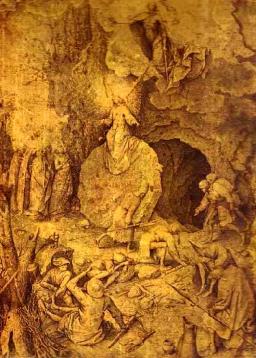
In the Jews' efforts to prevent anything from happening that would cause people to believe that Jesus was resurrected, they gave one of the most sure proofs of His resurrection. They sealed the tomb so it would be obvious if it had been opened and they obtained a guard of soldiers to protect it.
This removes all doubt that the followers of Jesus could have stolen His body. Therefore, the enemies of Jesus became a historical witness that Jesus literally rose from the dead.
The guards told the chief priests everything that happened at the tomb. This means that they had a complete account of the earthquake, the angels rolling away the stone, and the angels giving the message to the women that Jesus was alive from the dead....


Self-denial is embraced by much of Christianity today. Historically, self-denial has always been a big part of false religion. Most religions of the world teach an abasement of self, but they do it as penitence in order to obtain salvation. This is not the denying of self that the Bible advocates.
True self-denial as the scriptures promote is not self hatred or masochism, but rather an enthroning of Christ above self. We have a new identity in Christ that replaces the old self. We don't deny self in order to obtain salvation, but it is a love response to what Christ has already done for us. He gave His all for us and we willingly give our all back to Him.
Denying self in an attempt to earn salvation is most always...

The Sabbath was first mentioned in scripture in Exodus 16, when the Lord miraculously provided manna to the children of Israel in the wilderness. The Israelites were commanded to gather twice as much manna on the sixth day because God would not provide any on the seventh day (Ex. 16:5, 22-30).
Shortly after this, the Lord commanded the observance of the Sabbath day in the ten commandments that were given to Moses on two tablets of stone on Mt. Sinai (Ex. 20:8-11). In this command, God connected the Sabbath day with the rest He took on the seventh day of creation.
According to Exodus 23:12, one of the purposes of the...