
Blogs



What was it that this wicked servant didn't have that caused his master to take back the money he had given him? It wasn't the tangible money that he had been given. He had kept that laid up in a napkin and he still possessed it. What he was missing and what the other servant had that caused the lord to give this pound to him was faithfulness. Those who are faithful with what God has given them will be given more, and those who are wasteful will have what God has given them taken away and given to another.
Christians will one day stand before the Lord for the purpose of receiving rewards, and all our actions will be revealed, whether they were our own doings or directed by the Spirit of God. Those who were not governed by...

The Greek word for "usury" means primarily "a bringing forth, birth, or offsprings." It is used metaphorically for the profit received by a lender.
The Law of Moses attempted to protect both borrower and lender. In Israel, borrowing and lending was not for big, commercial enterprises but rather to help the poor and needy who lacked everyday necessities. In lending, the lender had the opportunity to help the poor in need. It was an act of love in which the lender actually lifted a burden by helping his fellow Israelite through a crisis, but was forbidden to charge usury. To relieve the burden of the poor, debts were released every seven years and property restored during the year of Jubilee.
In the New Testament, the practice of lending money at...

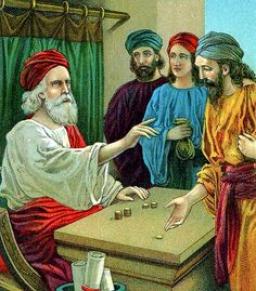
The main purpose of this parable is to show that there would be a long period when Jesus would go away before returning to fulfill the prophecy about a physical kingdom on earth.
The nobleman's servants were called to give an account for what they had done with their lord's money that was delivered unto them. The servants were commanded to "occupy till I come." These servants represent the followers of Jesus. However, being a follower of Jesus is more than simply not rejecting Him. It is an active commitment to serve Him. One of the ten servants had served himself and not His master. He did nothing with what his lord had given him. This...

WHEN THE PHARISEES HEARD ABOUT THIS, THEY DID NOT BELIEVE THE MAN HAD BEEN BORN BLIND SO THEY CALLED HIS PARENTS AND ASK THEM. THEY TOLD THEM THAT HE WAS THEIR SON AND WAS BORN BLIND BUT DID NOT KNOW HOW HE RECEIVED HIS SIGHT AND SAID HE WAS OF AGE, ASK HIM. THEY SAID THIS BECAUSE THEY WERE AFRAID OF THE JEWS BECAUSE THE JEWS HAD ALREADY AGREED THAT IF ANYONE CONFESSED THAT JESUS WAS CHRIST HE SHOULD BE PUT OUT OF THE SYNAGOGUE. THESE MUST HAVE BEEN LIKE THE JEWS THAT...
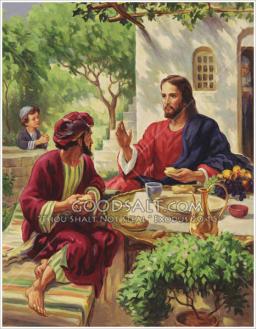
Zacchaeus was rich but Jesus made no demands for him to give away all his goods to the poor as He did with the rich young ruler. Zacchaeus had already repented and money was no longer his god, as was revealed by his actions. It seems that Zacchaeus was going above and beyond the requirement of restitution as stated in Mosaic law by offering to give half of his goods to the poor and to repay fourfold for his theft.
Publicans were hated by their fellow Jews. They were especially despised by the religious Jews as the epitome of sinners and Jewish religious laws prevented devout Jews from keeping company with any publican. To eat with a publican was unthinkable as the Jews...
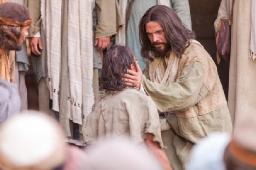
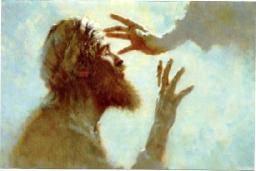
The devil will always have someone available to tell us why we shouldn't expect to get results when petitioning God. Most people would rather stay with the crowd and not do anything to draw attention to themselves even if that means not getting their needs met. They will try to make you conform as well. If this man would have listened to the crowd, he would not have received his healing. "Ye have not, because ye ask not" (Jas. 4:2).
This blind man is a good example of an active kind of faith. He was not passive in his approach toward healing. He boldly cried out to Jesus for mercy. When the crowd ridiculed him and told him to be quiet, he cried out even louder for mercy.
Many people believe that God can perform the miracle...