
Blogs


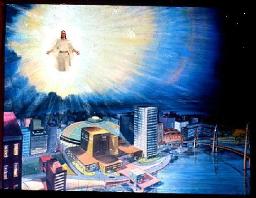
Some people have interpreted this as saying that it is possible to never die. Therefore, there are people today who are believing that they will live physically until the second coming of Jesus, even if that is thousands of years away. Although it is understandable how someone could interpret this verse in that manner, it is very doubtful that this is what Jesus truly meant.
First, a doctrine as profound as this would certainly be well documented in other scriptures. Other scriptures may sometimes be quoted as supporting this claim but they would not lead a person to this conclusion by themselves.
There would already have to be a prejudice in favor of this stand within a person to lead him to interpret these scriptures in this light. That is not a sound method of Bible...
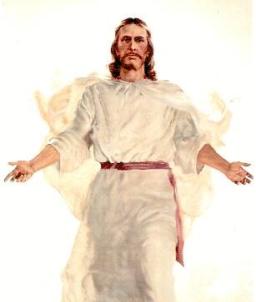
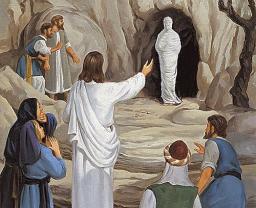
Jesus spoke of Lazarus being asleep instead of dead because that is really a much better description. Death, to their carnal minds, would be final; whereas the word "sleep" would not. When the disciples misunderstood what He was saying, He clarified the situation by saying plainly, "Lazarus is dead."
This looks like a contrary statement to what Jesus was going to do (raise Lazarus from the dead) and indeed it would have been if He had left it at that. But He went on to say in verse 15, "I am glad for your sakes that I was not there, to the intent ye may believe." This was referring to Lazarus being raised from the dead and it turned Jesus' statement of a negative fact into a positive confession of faith.
Many people have been confused over this very issue. Many times people will refuse to speak of or...
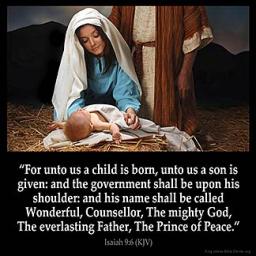
There are many scriptures where death is spoken of as sleep, however, the disciples thought Jesus was speaking of Lazarus simply resting. Jesus eventually clarifies their misunderstanding by using the word "death," but that was not His first choice. This is because God's perspective is different than ours. Death is final to natural man but not to God. There will be a resurrection.
In his second letter to the Corinthians Paul uses natural illustrations to explain the resurrection. He speaks of seeds that are buried in the ground and "die." Then they are resurrected as a plant. The plant and the seed bear no resemblance but they are actually the same. The plant is just in a resurrected state. Likewise, our physical bodies will die but they will be...

Jesus compares His decision to return to Judaea to a man traveling during the day. Daytime travel doesn't guarantee a hazard-free trip but the light does allow us to see the hazards. At nighttime, it's inevitable that we will stumble. Likewise, walking in the light of God's direction doesn't mean that there won't be problems, but the alternative of "doing our own thing" (that is walking in darkness) is guaranteed to get us into trouble.
Jesus was obeying the leading of His Father to return to Judaea. He could see exactly what was going to take place and He was going to walk in the light that His Father had given Him. Our decisions should not be based on whether or not we will be hurt in some way as a result of our...
When facing a difficult situation in our lives when do we ask our Heavenly Father for help?
By Jim N Carolyn Barber, 2016-08-08

Good evening to everyone. I'd like to ask you a very important question, that all born-again children of God should ask themselves. When facing a difficult situation in our lives when do we ask our Heavenly Father for help? If you're like me and a large percentage of Christians, you wait until you've exhausted every means of solving the problem yourself and after, all efforts on our part have failed, we finally ask God to help us. Why do we not pray and ask God for His assistance before the problem, as far as what we can do, is completely out of control? Do we somehow feel that a God, who is all powerful, all knowing and can be everywhere at one time doesn't care about the problems we face in our Christian walk with Him? This could not be further from the truth. In Luke 12:27-31 King James Version (KJV) God lets us know that we are very important to Him and there is nothing we face in life, that He is not willing to face with us if we would just pray...
What is the worst hurt a child of God can experience, excluding a death in the family?
By Jim N Carolyn Barber, 2016-08-08

Hello to everyone once again. I would like to ask you to ponder the following question? What is the worst hurt a child of God can experience, excluding a death in the family? You may say it has to be going through a divorce, family member turning on you or maybe a wife or husband being unfaithful. These are very hurtful things, but my wife and I feel the absolute worst hurt we have gone through is that of a so-called Christian showing no compassion or empathy in our time of need.
My wife and I wrote a book, called "Only God". which was published two years ago. I would like to quote a few words from it which we hope will be beneficial to you in your daily christian life. The book says and I quote, "If you haven't experienced being hurt by someone at church, it is likely one of the worst pains you will ever feel. "To think the one you thought could help you or offer encourage is the one who ends up kicking you, when you are down. "The church is...

Welcome to the Indie Gospel's Top 20 Chart for AUGUST 2016. are you all aware of the quality of songs that are going through IndieGospel? Wow! Here is the Top 20
- "LIft Up Your Hands" The Lord has blessed this lady from South Caroliona, Kristie Hutson with a great song in "Lift Up Your Hands" the bassman had an incredible touch with that double pickin. cool.. Kristie voice is sharp, this song stays with you
- "When You Call My Name" nice touch with the guitar, bass and voice. John Lord's voice is rich, and a very strong "Story telling voice" this one is no exception.
- "UNless I had a Friend" sounds of Eagles, but's the Sound of Jerry Herrera. listen to the awesome harmonies, the stagger beat, One Word on this song .... NAILED!"
- "I Love My Country" by Jim Sheldon With the Spiritual battles we are all involved with, this is so appropo. Even with the election so close,...