
Blogs


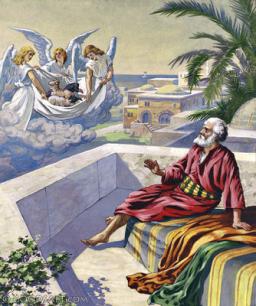
All of the Old Testament dietary laws were shadows (or pictures) of spiritual truths which would become realities in the New Covenant. These Pharisees (as well as many Christians today) missed all of the spiritual significance of these laws and saw only the physical act.
The real spiritual meaning that these Old Testament dietary laws symbolized was that we were supposed to be holy (separated) unto God in everything - even what we eat. Under the Old Testament law, it was forbidden to eat or to touch certain animals, not because there was anything wrong with the animals, but to illustrate the point of being separated unto God and to serve as a constant reminder of this separation. Under the New Testament, we see that...
Deuteronomy 4:2 clearly states "Ye shall not add unto the word which I command you, neither shall ye diminish ought from it . . . ." This same thought is repeated in the New Testament in Revelation 22:18-19 with very stiff penalties. Religious man is very swift to observe the part about not diminishing any of God's commandments, but there seems to be an unwritten law that adding to them is okay. Every denomination has its own set of "do's and don'ts" which aren't found in scripture, and like those of the hypocritical Pharisees, their unwritten laws usually have to do with outward appearance.
We need to remember that adding to God's commandments is just as bad as taking away from them. We need to speak when the Bible speaks, and be silent when the...

This is the biblical definition of a hypocrite, "someone whose words and heart (actions) don't agree." A hypocrite may act the part of a Christian or he may talk like Christ, but he won't do both. When both confession and action from the heart are consistent with God's Word, there is salvation (Rom. 10:9-10).
The word "hypocrite" comes from the Greek word "hupokrites," meaning "the playing of a part on the stage; an actor." It was a custom for Greek and Roman actors to use large masks, when acting, to disguise their true identity. Hence, hypocrisy became "the feigning of beliefs, feelings, or virtues that one does not hold or possess; insecurity" (American Heritage Dictionary).
The...

WE JUST NEED TO REMEMBER TO ASK IN HIS NAME. THAT IS WHAT HE TELLS US IN JOHN 14:13-14 WHERE HE SAYS "And whatsoever ye shall ask in my name, that will I do, that the Father may be glorified in the Son. If ye shall ask any thing in my name, I will do it." THAT IS PRETTY CLEAR TO ME.
WE ALSO NEED TO REMEMBER TO ASK ACCORDING TO HIS...

Man looks on the outward appearance (this is what the scribes and Pharisees were concerned with), but the Lord looks on the heart (1 Sam. 16:7). Jesus looked on men's hearts. The Old Testament laws concerning washing served a secondary purpose of hygiene, but as stated in Colossians 2:16-17 and Hebrews 9:1,9-10, their real purpose was to shadow or illustrate spiritual truth.
Defiled food may hurt our bodies, but it cannot reach our spirits (Jn. 3:6).
The scribes and Pharisees missed the principle of spiritual purity taught by the Old Testament ordinances and became obsessed with strict adherence to their rituals. While they relentlessly enforced the laws dealing with the physical realm, they had become completely corrupt in the spiritual...
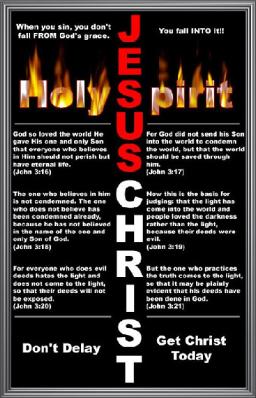
Jesus is stating that our spirit, not our flesh, is where our life comes from. These people were so dominated by their physical lives that they were missing all the spiritual significance of His words. Although God's Word does benefit our physical man, the Word is spiritual and must be understood through the spirit. God's Word is spirit and it takes our spirit to illuminate its truths to our minds.
The Word of God is not paper and ink. Jesus is the Word, and He existed in spiritual form long before any words were inspired to be written down by the Holy Ghost. The Bible is simply a physical representation of Jesus and spiritual truth. It is inspired of God and therefore, totally accurate and reliable, and yet, until we receive the Spirit expressed in these words the Bible will not...

DID YOU KNOW THAT HUNDREDS OF YEARS BEFORE JESUS, OUR LORD, WAS EVEN BORN, JEREMIAH WROTE ABOUT HIM IN JEREMIAH 29:11 SAYING " For I know the thoughts that I think toward you, saith the Lord, thoughts of peace, and not of evil, to give you an expected end. I WOULD ASSUME THAT THE "EXPECTED END" WOULD BE OUR SALVATION AND OUR BEING ABLE TO LIVE WITH HIM FOREVER. THAT IS AN "expected end" I AM ENJOYING NOW AND WILL THROUGHOUT ETERNITY.
IN THE NEXT TWO VERSES, 12 AND 13, HE TALKS ABOUT US PRAYING TO...